
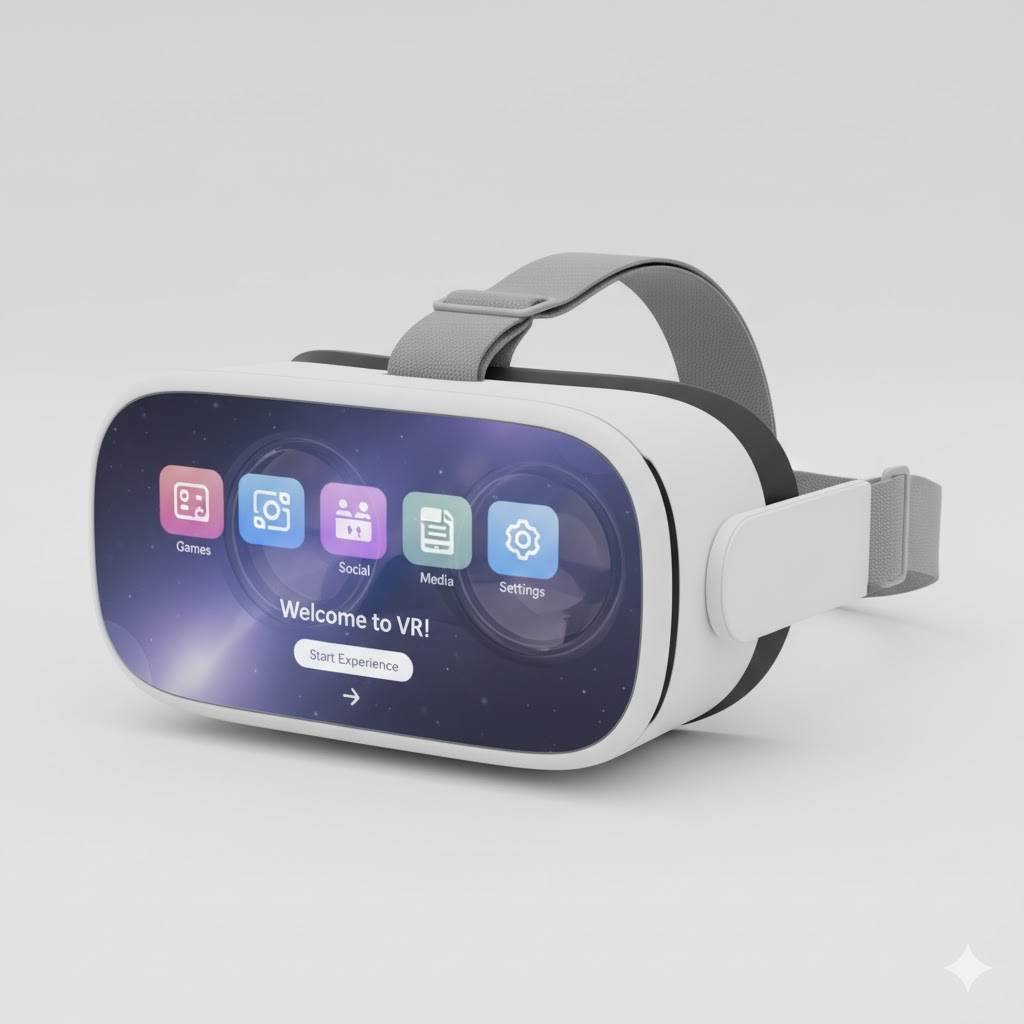
1. Introduction: The Shift from Player to Presence
For years, Virtual Reality (VR) was synonymous with high-octane gaming. While still a thriving segment, the VR Metaverse is currently undergoing a massive transformation. It’s no longer just a place to slay dragons or race cars; it’s rapidly becoming a platform for genuine social connection and professional collaboration. The driver behind this change is a suite of sophisticated new social features that are closing the gap between virtual and real-world interactions.
This evolution is critical because it justifies the broader adoption of VR devices beyond the early adopter demographic. As headsets become more affordable, the focus shifts to making the virtual environment feel less like a game and more like a shared, persistent space where users can feel true presence. We dive into the core innovations making the VR Metaverse truly social.

2. Core Features Driving Immersive Social Connection
The quality of social interaction in the Metaverse hinges on two major technological advancements: realistic representation and natural communication.
The Rise of Realistic Avatars and Identity
The days of simple, cartoonish avatars are fading. New VR Metaverse Social Features emphasize identity and expression through highly customizable, often photorealistic, avatars.
- Face and Eye Tracking: Advanced headsets now track eye movements and facial expressions, directly mapping them onto the avatar. A frown, a nod, or a quizzical glance translates instantly, adding layers of non-verbal communication previously missing.
- Body Language Mapping: Full-body tracking accessories and predictive AI models allow avatars to exhibit natural body language, making virtual interactions feel far less rigid and more human.
These features drastically increase social presence, making users feel genuinely connected to the person behind the avatar.
The Power of Spatial Audio Immersion
In real life, the sound of a conversation tells you where the speaker is standing. Spatial Audio, now standard in leading VR platforms, replicates this effect. If a user walks behind you, their voice moves from the front to the back of your virtual head. This is a game-changer for group discussions:
- It eliminates the confusing “voice-of-God” phenomenon where everyone sounds equally loud and centralized.
- It facilitates natural sub-group conversations within a larger virtual room, just like at a real-world party or conference.

3. Beyond the Living Room: Professional and Educational Applications
The new VR Metaverse Social Features are not just for casual hanging out; they are transforming remote work and education. Companies are adopting VR platforms because they solve some of the persistent problems of 2D video conferencing.
- Virtual Boardrooms and Collaboration: Persistent virtual offices allow teams to quickly jump into a shared space. Users can interact with 3D models, write on virtual whiteboards, and maintain eye contact with all participants, leading to more engaging meetings and brainstorming sessions.
- Skill Training and Education: Educators and trainers can utilize the social features to conduct collaborative training simulations (e.g., medical procedures, equipment maintenance). The ability to socially interact with other participants in a shared, risk-free environment significantly boosts learning retention.
The improved presence offered by these social features turns a simple virtual meeting into a collaborative experience that rivals being physically in the same room.
4. Accessibility and the Future of Social VR
A key factor in the success of these VR Metaverse Social Features is the rapid decrease in the cost and complexity of the hardware. Budget-friendly headsets are lowering the barrier to entry, ensuring that a broader audience can participate. This accessibility is crucial for building a truly diverse and functioning Metaverse, moving it away from a niche tech toy and toward a genuine social utility.
As 5G networks improve the stability and reduce the latency of these connections, expect these social features to integrate seamlessly into daily life, offering rich, face-to-face interaction regardless of geographical distance.
5. Final Verdict: The New Social Frontier
The Metaverse is finally becoming the social platform it was promised to be. By focusing on realistic avatars, natural communication via spatial audio, and robust professional collaboration tools, the latest VR Metaverse Social Features have positioned VR devices as the next essential communication tool. The technology is no longer just for play—it’s for presence.
REALUSESCORE.COM Analysis Scores: VR Metaverse Social Features
| Metric | Score (out of 10.0) | Note |
| Avatar Realism & Customization | 9.1 | Significant leap in face/eye tracking, making non-verbal cues powerful. |
| Spatial Audio Immersion | 9.5 | Essential feature for natural group conversation and collaboration. |
| Accessibility of Social Platforms | 8.8 | Low-cost VR devices are driving broader, non-gaming user adoption. |
| Cross-Platform Compatibility | 7.9 | Still fragmented; major platforms struggle to interact seamlessly. |
| Stability & Latency (Social Use) | 8.5 | Generally stable, but minor latency spikes can still disrupt flow. |
| REALUSESCORE.COM FINAL SCORE | 8.8 / 10 | Strong Potential – The technology is shifting from novelty to genuine social utility, highly promising for remote work. |