The global race for artificial intelligence supremacy is fundamentally a race for computing power. At the core of this power struggle lies NVIDIA GPU Market Dominance. Recent developments, particularly the massive GPU deployment in Asia, underscore this trend. Through strategic partnerships with South Korean giants like Samsung and SK Hynix, NVIDIA is injecting over 260,000 GPUs into AI Data Center infrastructure, simultaneously expanding its reach into cloud services and pivotal sectors like automotive, notably with Hyundai. This article examines how this concentrated strategy is cementing NVIDIA GPU Market Dominance and accelerating the global AI infrastructure build-out via key Korea Tech Collaboration.
1. The Strategic Importance of Korea Tech Collaboration
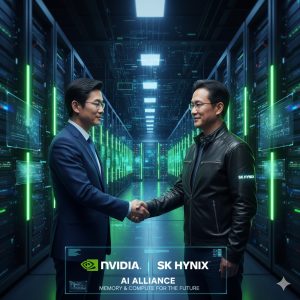
South Korea is not just a consumer of AI infrastructure; it is the critical manufacturing hub for the High Bandwidth Memory (HBM) essential to modern AI GPUs. NVIDIA‘s deep collaboration here is multi-faceted and strategic.
HBM Supply Chain Security
The enormous deployment of over 260,000 GPUs for AI Data Center projects is reliant on a stable supply of high-performance HBM. Samsung and SK Hynix are the world leaders in HBM technology.
- SK Hynix: Supplies advanced HBM for NVIDIA’s flagship data center GPUs.
- Samsung: Focuses on developing next-generation HBM and providing advanced packaging solutions.
This tight-knit Korea Tech Collaboration ensures NVIDIA GPU Market Dominance by securing the most vital component in the AI supply chain.
2. Cementing NVIDIA GPU Market Dominance in Key Sectors
NVIDIA‘s strategy goes beyond simply selling chips; it involves integrating its platforms into industry-leading applications, ensuring long-term dependence on its ecosystem.
Expansion into Automotive (Hyundai)
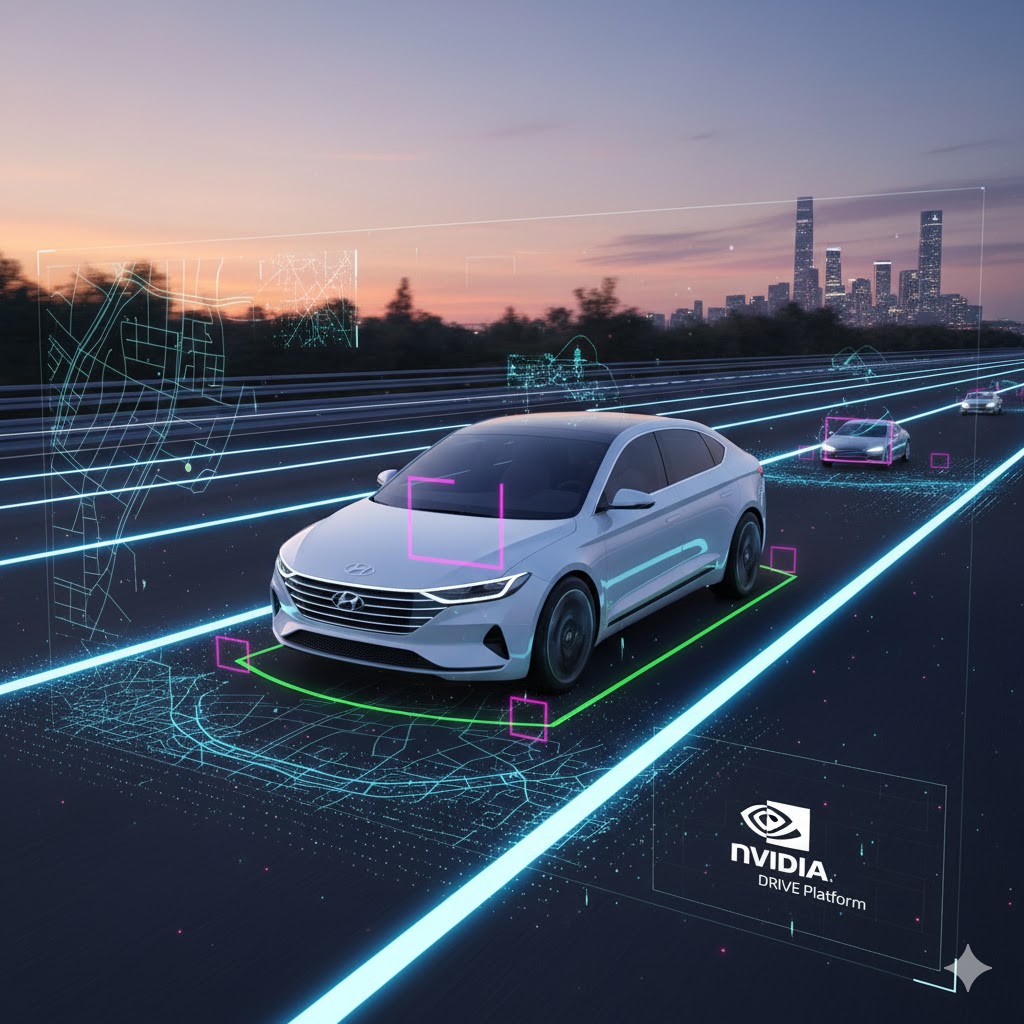
The partnership with Hyundai Motor Group to integrate NVIDIA chips for autonomous driving capabilities is a significant growth vector.
- Drive Platform: Hyundai utilizes NVIDIA’s DRIVE platform, which is an end-to-end solution for AI-powered autonomous vehicle development.
- Impact: By securing a position in this high-growth sector, NVIDIA GPU Market Dominance extends from the AI Data Center all the way to consumer vehicles.
Cloud and Hyperscale Infrastructure
The deployment of over 260,000 GPUs primarily targets hyperscale cloud providers and regional AI initiatives, creating massive, localized AI Data Center capacity. This localized investment drives regional tech growth and reinforces the necessity of the NVIDIA CUDA ecosystem. For more on the infrastructure supporting this growth, read our report on Hyperscale Data Center Security 2025.
3. The Challenge of AI Data Center Scale
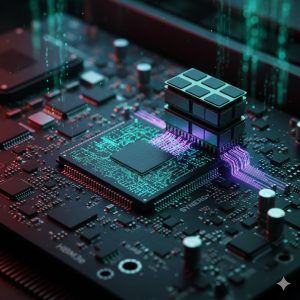
The sheer scale of this GPU deployment (260,000+ units) highlights the escalating demands of modern LLMs and deep learning models. This massive scale creates challenges:
| Challenge | Implication for NVIDIA GPU Market Dominance | Solution Focus |
| Power Consumption | Massive energy requirements for the AI Data Center infrastructure. | Korea Tech Collaboration on liquid cooling and power efficiency standards. |
| Alternative Chips | Competition from AMD Instinct and custom chips (TPUs). | Continual performance lead via new HBM generations (HBM4/5) and software lock-in (CUDA). |
| Supply Chain | Geopolitical risks affecting chip manufacturing. | Diversifying packaging and assembly through strategic partnerships in Asia. |
Final Thoughts: The Unstoppable AI Data Center Engine
The strategic move by NVIDIA to pour hundreds of thousands of GPUs into Asian infrastructure via robust Korea Tech Collaboration is a masterclass in market expansion. It secures their supply chain, cements their position in automotive AI, and provides the brute force required for next-generation AI Data Center projects. The continued NVIDIA GPU Market Dominance is not just about having the best chip; it’s about controlling the entire ecosystem—from memory manufacturing to end-user applications. The future of AI will be built on these GPUs. For official statements on their collaboration, check the NVIDIA Press Release Hub.