
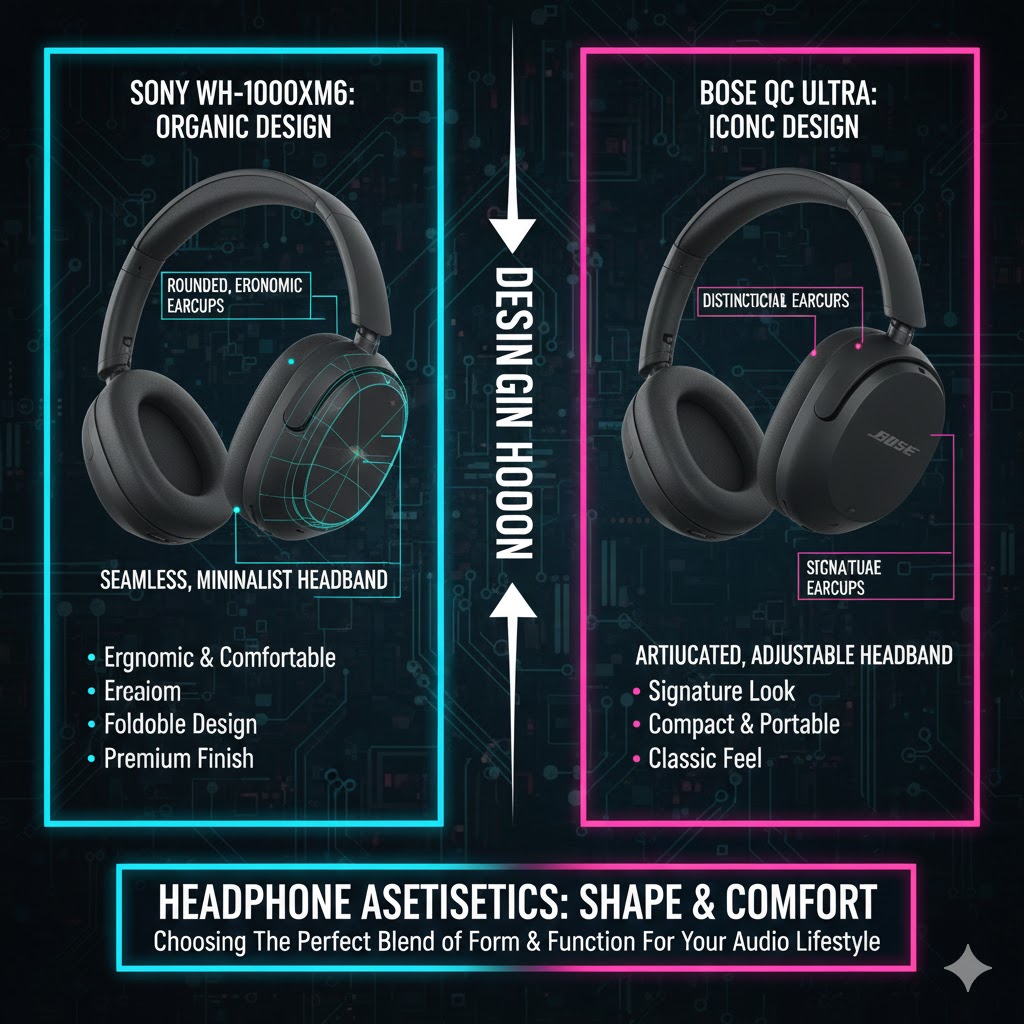
The Flagship ANC Battle Intensifies: Why 2026 is the Peak of Headphone Technology
The battle for supremacy in the Noise-Cancelling (ANC) headphone market has reached a fever pitch in 2026. For years, the landscape has been defined by the rivalry between Sony’s WH-1000X series and Bose’s QuietComfort (QC) series. The newest iterations—Sony’s WH-1000XM6 and Bose’s QuietComfort Ultra Headphones (2nd Gen)—are not just minor updates; they represent a leap forward in audio processing, battery efficiency, and spatial sound rendering. Both companies have integrated specialized neural processors, moving beyond simple acoustic cancellation to predictive, environment-aware noise management.
We will analyze their technological innovations, measure their performance against real-world scenarios, and ultimately determine which flagship model offers the best value, comfort, and performance for different user profiles.
WH-1000XM6 vs. QC Ultra (2nd Gen) Summary Comparison Table
| Category | Sony WH-1000XM6 | Bose QuietComfort Ultra (2nd Gen) | Winner (Subjective) |
| Noise Cancelling (ANC) | Industry-leading, natural, predictive noise handling. | Industry-leading, surgical low-frequency suppression. | Draw |
| Sound Quality and Detail | Superior clarity, analytical profile, LDAC 3.0 support. | Balanced, comfortable, exceptional Immersive Audio processing. | Sony |
| Battery Life | Approx. 37 hours with ANC on. | Approx. 27 hours with ANC on. | Sony |
| Comfort | Very Good, improved earcup depth and padding. | Best in Class. Low clamping force for marathon sessions. | Bose |
| Microphone Quality | Excellent voice isolation via Neural Processor. | Very good, reliable across all environments. | Sony |
| Value (Feature Set vs. Price) | High value due to versatile feature depth. | High value due to premium comfort and spatial tech. | Draw |
1. The ANC Showdown: Predictive Silence vs. Surgical Suppression
The core of this rivalry lies in the noise-cancelling technology itself. Both the XM6 and the QC Ultra 2nd Gen utilize new, dedicated chips—Sony’s QN1 Pro Neural Engine and Bose’s Acoustic Neural Processor (ANP)—to handle ANC computations.
Sony WH-1000XM6: The Power of Contextual Awareness
Sony’s approach with the XM6 focuses on contextual awareness. The QN1 Pro Neural Engine analyzes external noise patterns, wear status, and even atmospheric pressure in real-time. This dynamic processing allows the headphones to anticipate noise changes, such as a sudden subway announcement or a brief engine roar, and adjust the anti-noise wave instantaneously.
-
Predictive ANC: The XM6 actively learns and predicts recurring noise signatures (e.g., specific office HVAC drone, train horn timing) and prepares the cancellation wave slightly ahead of time. This results in an incredibly smooth and unnoticeable transition into silence. The efficiency of this prediction system is a key differentiator from previous generations.
-
Low-Frequency Mastery: The XM6 maintains its historical dominance in crushing consistent, low-frequency hums, such as airplane engines and bus rumble. This deep, broadband cancellation makes it the preferred choice for frequent long-haul travelers who spend hours in constant background noise. The new processing unit handles complex, mixed low-frequency noise much more efficiently than ever before.
-
Ambient Sound Refinement: The XM6’s ambient mode utilizes adaptive filtering, allowing human voices and announcements through clearly while still dampening sudden, jarring spikes in noise. This feature is invaluable for commuters who need situational awareness without having to remove their headphones entirely.
Bose QuietComfort Ultra (2nd Gen): Unmatched High-Frequency Precision
Bose continues its tradition of delivering silence through precision. The ANP focuses on surgical noise removal, analyzing the frequency spectrum with extreme granularity.
-
The Signature “Vacuum” Feel: While slightly reduced from past models to enhance comfort, the QC Ultra still provides a palpable feeling of isolation. This specific sensation is particularly appealing to those who desire the strongest possible feeling of silence, often described as stepping into a quiet room.
-
High-Frequency Filtering: Bose has slightly edged out Sony in handling unpredictable, higher-frequency sounds like chatter, the clacking of mechanical keyboards, and general office din in a busy environment. This makes it a favorite for focused work environments where speech and sudden noises are the primary distractions.
-
Transparency Mode: The QC Ultra boasts one of the most natural-sounding transparency modes on the market. The clarity and fidelity of the external world heard through the microphones are so accurate that conversations feel almost as if you weren’t wearing headphones at all, making brief interactions seamless.
Verdict: Choosing a winner here is subjective and depends heavily on the user’s primary environment. If you prefer natural, smooth, and predictable silence for air travel or consistent low-frequency environments, choose the XM6. If you need maximum high-frequency isolation for office work and appreciate a superior Transparency Mode, the QC Ultra is the slight favorite. Both, however, represent the absolute zenith of 2026 ANC technology.
2. Sound Quality, Codecs, and Spatial Audio Implementation
Beyond ANC, the way these headphones handle music is crucial. This is where the proprietary technology and sound signatures diverge significantly, reflecting the unique philosophies of Sony and Bose regarding audio reproduction.
Sony WH-1000XM6: The High-Res Powerhouse
Sony continues to push the envelope for wireless high-fidelity audio, leveraging its position as an audio hardware and content company.
-
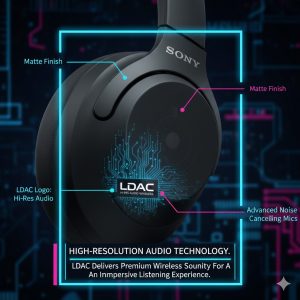
LDAC 3.0: The XM6 debuts LDAC 3.0, a refined and stabilized version of its high-resolution audio codec. It offers even more stable, higher bit-rate streaming (up to 990 kbps) for Android and Sony devices. This results in demonstrably superior detail, clarity, and depth compared to the standard AAC/SBC protocols used by the competition. The difference is particularly noticeable when streaming Hi-Res audio tracks.
-
Sound Signature: The sound profile is slightly V-shaped but highly customizable via the powerful companion app EQ. It is dynamic, with punchy, controlled bass and crystalline high-frequency detail, designed to reveal the nuances in complex orchestral or rock tracks. The XM6 caters directly to the discerning listener.
-
360 Reality Audio: Sony’s proprietary spatial audio format remains strong, utilizing head tracking for a more immersive listening experience. It integrates deeply with specific streaming services, creating a ‘bubble’ of sound around the listener.
Bose QuietComfort Ultra (2nd Gen): Immersive Audio Dominance
Bose’s focus is on creating a rich, expansive, and universally accessible listening experience, regardless of the audio source.
-
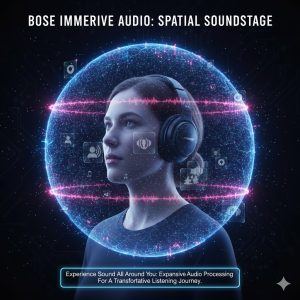
Immersive Audio: This proprietary feature is Bose’s answer to spatial audio and is arguably its biggest selling point. Unlike static or standard head-tracking found elsewhere, Bose’s implementation creates a three-dimensional soundstage that is remarkably convincing. It makes music sound huge and encompassing, moving beyond the traditional ‘in-your-head’ headphone sound. This feature is exceptionally excellent for movies, podcasts, and gaming, dramatically improving the sense of presence.
-
Sound Signature: The sound is intentionally warmer, flatter, and exceptionally well-balanced. It prioritizes long-term listening comfort over analytical detail, avoiding the harshness that can sometimes accompany overly bright profiles. This signature makes even poor-quality recordings sound better, while still providing enjoyable depth to hi-res files.
-
Platform Agnostic: Bose’s Immersive Audio works with virtually any audio source and operating system (including standard AAC streaming on iOS), as the intensive processing is handled entirely within the headphone’s ANP chip, meaning the quality is not reliant on specific device codecs like LDAC. This ease of use is a major advantage. For more information on this topic, be sure to read our dedicated article: The Impact of Web3 on Content Ownership and Creator Economy: A 2026 Forecast.
Verdict: For pure audiophile detail, high-resolution playback, and deep EQ customization, the XM6 is unmatched due to LDAC 3.0. For the most consistent, expansive, and thrilling spatial audio experience across all content platforms, the QC Ultra is the industry leader.
3. Battery Life, Comfort, and Microphone Clarity
The user experience over long sessions depends heavily on endurance, ergonomics, and communication capability.
Endurance King: Sony WH-1000XM6
The XM6 sets a new benchmark for endurance in the ANC category, building on its predecessor’s already impressive performance.
-
Battery: At 37 hours with ANC on, it outlasts the QC Ultra by a significant margin (10 hours). This translates directly to fewer charges, greater reliability during multi-leg travel, and less range anxiety for users. Sony achieved this through a combination of a larger battery cell and the extreme power efficiency of the QN1 Pro Neural Engine.
-
Quick Charge: A 5-minute charge provides up to 5 hours of playback, a crucial feature for rushed travelers who need a rapid boost before heading out.
-
Comfort: Sony has noticeably refined the earcup shape and padding thickness, slightly reducing the clamping pressure from the XM5. The synthetic leather used is more breathable and durable. While significantly more comfortable than older Sony models, it still doesn’t quite match the sheer lightness and plushness of the Bose, especially for users with larger heads.
Ergonomics Champion: Bose QuietComfort Ultra (2nd Gen)
Bose remains the champion of long-term wearability, a factor critical for many office workers and frequent flyers.
-
Comfort: The QC Ultra’s design is engineered for minimum fatigue. The headband and earcup padding are supremely soft, and the low, perfectly calibrated clamping force makes them feel nearly weightless, even after 8-10 hours of continuous use. Bose continues to excel in making the headphones “disappear” on your head.
-
Battery: 27 hours of ANC-on playback is still very strong, easily covering most daily commutes and long flights, though it falls short of Sony’s new record. The battery performance is consistent even with Immersive Audio enabled, a technical achievement.
-
Microphone: Bose has integrated its advanced VoiceAware technology. This system actively monitors the user’s voice and ambient noise, ensuring clear calls. While excellent, particularly in moderately noisy settings, the XM6’s QN1 Pro Neural Engine provides slightly superior, almost aggressive voice isolation in extremely loud environments (e.g., cafes or windy streets), making the Sony the marginal winner for critical calls.
Verdict: The XM6 delivers unmatched battery life and superior call clarity in noisy environments. The QC Ultra provides unparalleled physical comfort for extended use. The choice here depends purely on whether you prioritize charging less often (Sony) or feeling lighter on your head (Bose).
4. Conclusion and 2026 REALUSESCORE Recommendations
Both the Sony WH-1000XM6 and the Bose QuietComfort Ultra (2nd Gen) are phenomenal products, making 2026 a fantastic year for premium audio consumers. The difference between them is not in overall quality, but in philosophical approach and feature prioritization. Your ideal choice depends entirely on your lifestyle needs.
| Profile | Primary Choice | Secondary Choice | Justification |
| The Frequent Traveler | Sony WH-1000XM6 | Bose QC Ultra | Unbeatable battery life (37 hours) and dominant low-frequency, predictive noise cancellation are critical for long-haul flights. |
| The Remote Worker/Student | Bose QC Ultra | Sony WH-1000XM6 | Superior long-term comfort and excellent high-frequency noise handling for focused work sessions and consistent wear. |
| The Media Enthusiast | Bose QC Ultra | Sony WH-1000XM6 | The Immersive Audio experience is simply more expansive, thrilling, and consistently available for movies and cinematic content. |
| The Audio Purist | Sony WH-1000XM6 | Bose QC Ultra | LDAC 3.0 support and the highly customizable EQ offer the best technical path to high-resolution detail and personalization. |
The Overall Winner: In 2026, the Sony WH-1000XM6 slightly edges out its competitor to claim the overall best flagship ANC headphone title, primarily due to its revolutionary 37-hour battery life and the technological edge provided by the new, more stable LDAC 3.0 codec for high-resolution audio. However, those whose primary concern is physical comfort should still look toward the Bose.
REALUSESCORE Analysis Scores
| Evaluation Metric | ANC Performance | Comfort and Build | Battery and Features |
| Sony WH-1000XM6 | 9.8 | 9.0 | 9.7 |
| Bose QC Ultra (2nd Gen) | 9.7 | 9.5 | 9.0 |
| Sound Quality | 9.5 | 9.2 | 9.3 |
| Value for Money | 8.8 | 9.0 | 9.1 |
| REALUSESCORE FINAL SCORE | 9.45 | 9.18 | 9.28 |