

Introduction: What Are Digital Twins?
Digital twins are precise virtual replicas of physical objects, systems, or environments that update in real time via data from sensors and IoT devices.
They integrate advanced AI, machine learning, and cloud computing to simulate, monitor, and optimize their physical counterparts with unprecedented accuracy.
These technologies enable industries to make informed decisions, improve efficiency, and reduce operational risks without impacting the real-world asset.
Industrial Applications: Revolutionizing Manufacturing and Beyond
In manufacturing, digital twins help optimize assembly lines and machinery by simulating workflows and predicting maintenance needs.
Global automobile manufacturers like BMW use digital twins to simulate entire factories, enabling a 30% increase in production efficiency and reducing time-to-market for new plants by a full year.
Boeing uses digital twins to model aircraft performance and predict component failures, improving product quality by 40%.
Other industries leverage digital twins for smart factory monitoring, supply chain optimization, and enhanced worker safety, integrating with existing IoT and ERP systems.
Innovations such as AI-powered fault prediction and remote asset management reduce downtime and maintenance costs significantly.
Urban Planning: Building Smarter Cities
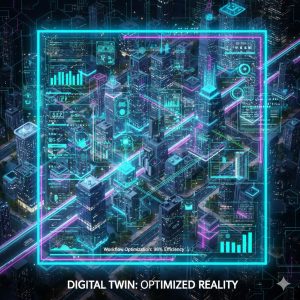
Digital twins facilitate smart city development by modeling urban infrastructure, traffic flows, and energy systems dynamically.
Cities like Singapore and Helsinki employ digital twins for real-time monitoring, efficient emergency response, and resource management.
These virtual city models enable scenario planning to reduce traffic congestion, optimize utility usage, and improve public safety before implementing costly physical changes.
Advanced BIM (Building Information Modeling) and sensor data integration in digital twins support sustainable urban growth and better resident services.
Future Trends: Integration and AI Enhancement
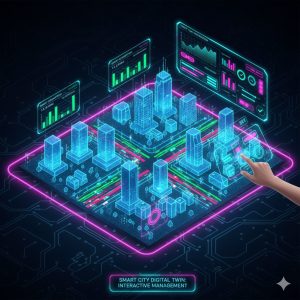
The future of digital twins is closely tied to enhanced AI analytics, 5G connectivity, and increasingly sophisticated sensor networks.
AI will automate more aspects of simulation and anomaly detection, providing actionable insights faster with less human input.
Cross-industry cloud platforms will enable collaborative digital twin ecosystems, accelerating innovation and operational agility.
Market analysts predict the digital twin industry will exceed $100 billion by 2028, driven by growing adoption in manufacturing, cities, healthcare, and transportation.

Conclusion: Transforming Industries and Cities
Digital twins are redefining how industries and cities operate, offering vast improvements in efficiency, sustainability, and safety.
This technology represents a foundational pillar of Industry 5.0 and smart urban ecosystems, powering a future where virtual and physical worlds merge seamlessly.
REALUSESCORE.COM Analysis Scores: Digital Twins Technology
| Metric | Score (out of 10.0) | Note |
|---|---|---|
| Predictive Maintenance | 9.3 | Early failure detection dramatically reduces downtime |
| Production/Process Optimization | 9.1 | Increases throughput and decreases waste |
| Urban Infrastructure Modeling | 8.8 | Enhances urban planning and public service delivery |
| AI & IoT Integration | 9.0 | Enables real-time data analysis and automation |
| Market Growth & Adoption | 8.7 | Rapid uptake across multiple sectors |
| Overall Score | 9.0 / 10 | Strong technological impact with broad applications |