
1. Introduction: A Tale of Two Strategic Moves
The digital landscape is constantly shaped by the strategic decisions of tech giants. Today, we observe two seemingly disparate, yet deeply significant moves from Google and Meta that reveal critical trends: Google is expanding AI’s physical reach, while Meta is consolidating its digital borders.
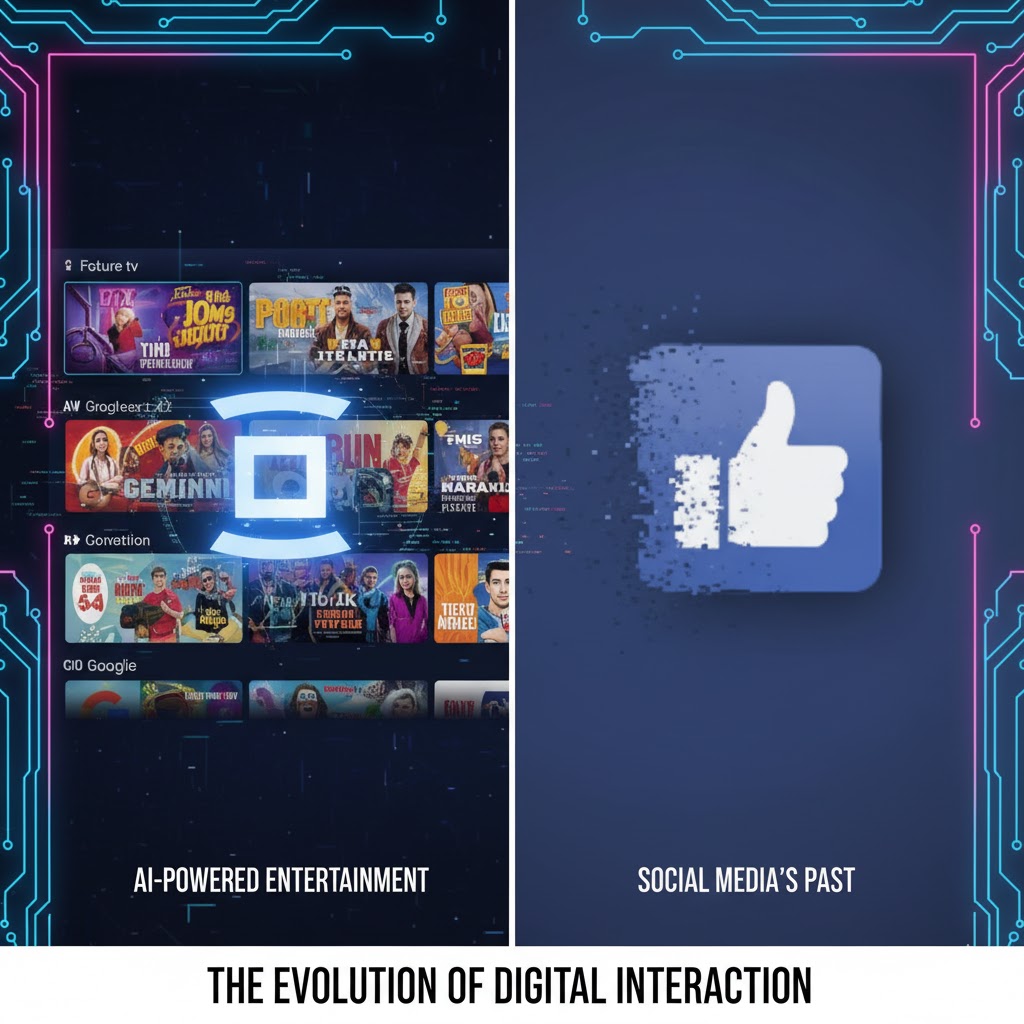
Google has announced the rollout of its powerful Gemini AI to Google TV streamers, fundamentally changing how we discover and interact with content on our largest screen. Meanwhile, Meta is retiring the external Facebook ‘Like’ button, a ubiquitous symbol of the early social web. This analysis dives into what these two actions—one of aggressive integration and one of calculated retreat—signify for the future of AI, content consumption, and user data.

2. Gemini AI Integration: Revolutionizing the Content Experience
The arrival of Gemini AI on Google TV Streamers marks a pivotal moment in the battle for the living room. Until now, smart TV interfaces were primarily based on static menus and keyword searches. Gemini changes the paradigm by enabling sophisticated, conversational content discovery.
Key Impacts of Gemini on Google TV:
- Advanced Conversational Search: Users can now ask complex, contextual questions like, “Show me sci-fi movies directed by women that have a rating over 8.0 and are available on both Netflix and Disney+.” Gemini processes this multi-faceted query instantly.
- Personalized Recommendations: Leveraging the AI’s ability to understand viewing history and subtle preferences, Gemini can surface content that generic algorithms miss, offering a true ‘AI concierge’ experience for TV viewing.
- Ecosystem Amplification: This move ensures that Google’s flagship AI is deeply embedded in the user’s home entertainment center, reinforcing the entire Google ecosystem, much like the earlier integration into Maps and Workspace.
This shift positions Google TV not just as a content aggregator, but as an intelligent content curator, making the user experience far more engaging and personalized.

3. Meta’s Retreat: The End of the External ‘Like’ Button
In a contrasting move focused on consolidation, Meta is phasing out the external Facebook ‘Like’ button and other similar social plugins that developers could embed on third-party websites. For over a decade, this button was the simplest way to share web content directly to Facebook.
What Meta’s Strategy Implies:
- Data Consolidation and Control: The ‘Like’ button was a massive, passive data collection tool for Meta, tracking user activity across the web, even if the user didn’t click it. Retiring it is a strategic response to increasing regulatory pressure and user demand for privacy (e.g., GDPR, state privacy laws).
- Focus on Core Platform: By removing these external hooks, Meta forces users to engage directly with its core apps (Facebook, Instagram) to share content, increasing on-platform time and value.
- A Shift from the “Open Web”: This move signals a retreat from the open, cross-platform web model of the 2010s towards a more closed, app-centric ecosystem, where Meta has tighter control over user data and engagement metrics.
This is less of a user-experience enhancement and more of a clean-up operation designed to streamline data governance and focus capital expenditure on Meta’s key priorities, particularly VR and the internal Metaverse.

4. Conclusion: Divergent Paths to Ecosystem Dominance
Google and Meta, two of the world’s most dominant tech companies, are pursuing different, yet equally determined, strategies for ecosystem control.
Google’s integration of Gemini into Google TV is an offensive move, aggressively embedding AI into the core of daily life to deliver superior utility and drive user reliance on the AI-powered Google ecosystem.
Meta’s removal of the external ‘Like’ button is a defensive move, calculated to reduce regulatory risk and solidify data control within its own walls, paving the way for future platforms (like the Metaverse) where data is tightly contained.
Both actions ultimately aim to deepen user engagement and cement platform loyalty, but they use fundamentally different tools—AI utility versus data perimeter control—to achieve their goals. For consumers, the takeaway is clear: expect more powerful, personalized AI experiences in your home devices, but anticipate stricter boundaries around how your social data is tracked across the wider web.