
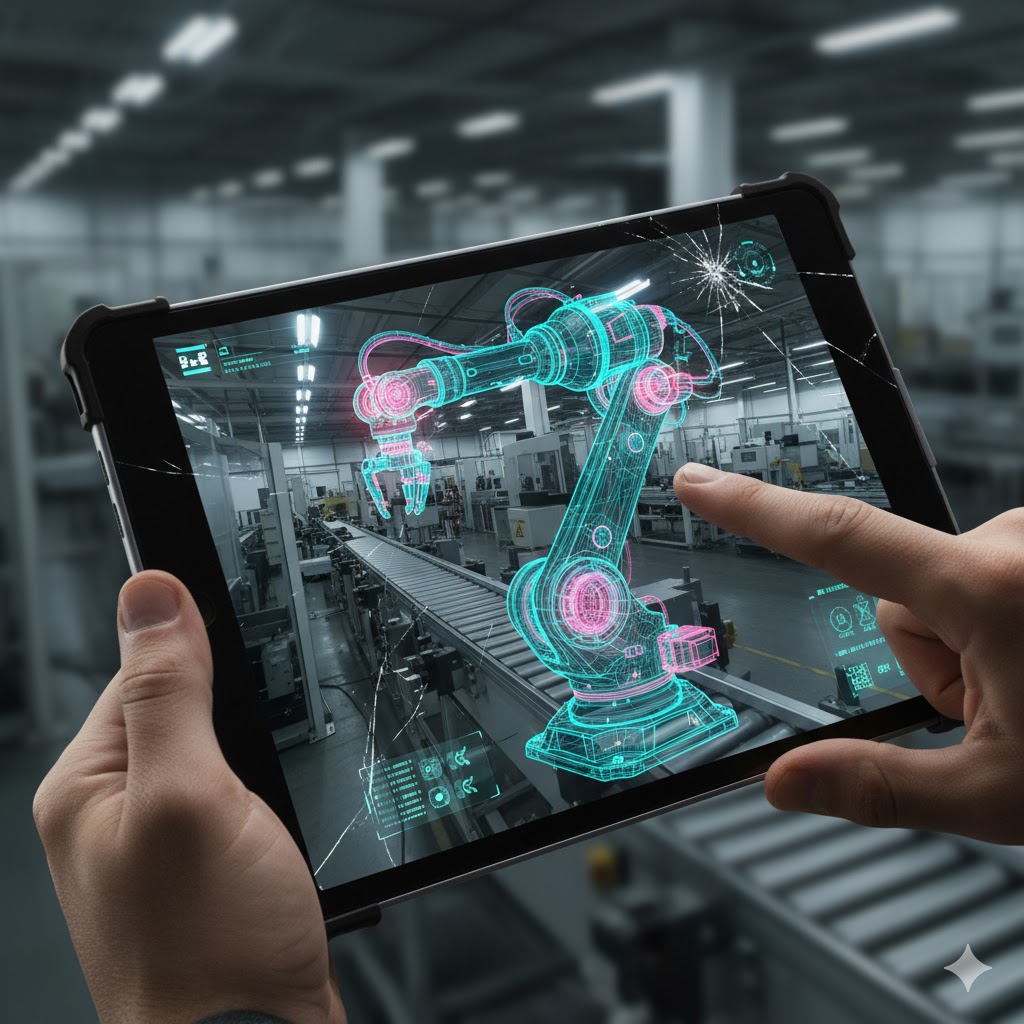
The future of manufacturing, logistics, and supply chain management hinges on the successful implementation of the Digital Twin. This critical technology demands the right foundational software. In 2025, the choice boils down to a key comparison: NVIDIA Omniverse (the specialized AI backbone), Unreal Engine (the visual powerhouse), or Unity (the versatile developer favorite).
While all three offer robust 3D environments, building an accurate, scalable, and data-integrated replica of a factory or robot fleet requires more than just good graphics. Choosing among these Industrial Digital Twin Platforms must prioritize real-time data flow, physics accuracy, and enterprise scalability over standard gaming features.

1. Platform Purpose: AI Backbone vs. Visual Engine
The original design philosophy dictates the strengths of each platform for industrial use.
- NVIDIA Omniverse: The AI Operating System. Omniverse was built specifically for Industrial Digital Twin development and Physical AI. Its core strength lies in OpenUSD (Universal Scene Description), which enables unparalleled interoperability between diverse industrial design tools (CAD, CAE) and physics solvers. This platform is ideal for designing, testing, and optimizing complex infrastructure like gigawatt AI factories using specialized Blueprints.
- Unreal Engine (UE): The Visual Powerhouse. Unreal Engine 5 is unmatched for photorealistic visualization. Features like Nanite (virtualized geometry) and Lumen (dynamic global illumination) deliver cinematic quality, making it the superior choice when visual fidelity for stakeholder presentations or virtual showrooms is the main goal.
- Unity: The Flexible Prototyper. Unity excels in accessibility and fast development cycles, utilizing the easier C# scripting language. It’s widely used for rapid prototyping and deployment across various hardware, especially mobile and AR/VR training simulations, due to its lightweight editor and broad platform support.
2. Specialized Demands: Data Integration & Physics
For an Industrial Digital Twin, graphical realism is secondary to functional accuracy.
- Real-Time Integration: Omniverse boasts native support for industrial communication protocols (e.g., OPC UA, MQTT) and real-time sensor simulation. This tight integration allows the digital twin to instantly reflect changes on the physical factory floor and enables AI-driven decision-making.
- Physics and Simulation: Omniverse is leveraged by NVIDIA CUDA-X and Modulus Physics-AI Framework. This combination delivers the highest level of physics accuracy and simulation performance—essential for validating robotic paths, material flow, and fluid dynamics before physical deployment.
- UE and Unity: While capable of connecting to data, achieving the same level of real-time, physics-accurate industrial simulation in these platforms typically requires significantly more custom development, external solvers, and complex API management.
3. Cost, Skillset, and Scalability
Enterprise choice is heavily influenced by the required investment in hardware, software, and human resources.
| Feature | NVIDIA Omniverse | Unreal Engine | Unity |
| Primary Skillset | USD, Python, NVIDIA SDKs | C++, Blueprint (Visual Scripting) | C# (Beginner-friendly) |
| Hardware Barrier | High (Requires RTX GPUs for core features) | High (For photorealistic rendering) | Moderate (Scales better for lower-end devices) |
| Enterprise Cost Model | Seat-based subscription (High infrastructure cost) | Annual Seat License (non-game: ~$1,850/seat/year) | Subscription Tiers (Industry tier: ~$4,950/year) |
| Best For | Industrial Digital Twin (Simulation/AI) | High-Fidelity Visualization | AR/VR Training & Prototyping |
For companies with significant compute resources and a focus on AI-driven operation, Omniverse’s ROI is highest. For others, the accessibility and cost model of Unity or the visual appeal of Unreal may be preferable for specific use cases.
Final Recommendation
To optimize your industrial project, align your goal with the right platform:
- Maximum Data Accuracy and AI Simulation: Choose NVIDIA Omniverse. It is the leading platform for Industrial Digital Twin Platforms that must integrate with real-time industrial data and sophisticated AI models.
- Best Visual Fidelity and Cinematic Quality: Choose Unreal Engine. Its graphics technology is unparalleled for creating stunning virtual presentations and high-end marketing assets.
- Fastest Time-to-Market and Cross-Platform Tools: Choose Unity. It is ideal for quickly developing and deploying mobile, AR, and VR applications for maintenance and training.

REALUSESCORE.COM Analysis Score: Industrial Digital Twin Platforms
The REALUSESCORE.COM team has analyzed these three platforms based on their specialized capabilities for enterprise industrial use in 2025. The scores are out of 10.0.
| Evaluation Criteria | NVIDIA Omniverse | Unreal Engine | Unity |
| Industrial Data & IoT Integration | 9.7 | 7.5 | 7.9 |
| Physics Accuracy & Simulation Performance | 9.5 | 8.8 | 8.2 |
| Visual Fidelity (Photorealism) | 9.0 | 9.8 | 8.5 |
| Developer Accessibility & Cost Efficiency | 7.5 | 8.0 | 9.2 |
| REALUSESCORE.COM Total Analysis Score | 8.9 | 8.5 | 8.5 |