1. The Audacious Vision: Understanding the Scale of NEOM’s Investment
The NEOM project in Saudi Arabia is perhaps the most ambitious construction and development plan in human history. Backed by the Saudi Public Investment Fund (PIF) and the direct vision of Crown Prince Mohammed bin Salman, NEOM is not just a city; it is an attempt to build an entirely new global hub, a hyper-connected futuristic region designed to operate outside the kingdom’s existing laws.
The project, which sits on the Red Sea coast, is central to Saudi Arabia’s “Vision 2030″—a plan to diversify its economy away from oil dependency and position the country as a global technology and innovation leader. The sheer scale of the investment is staggering, with initial estimates exceeding $500 billion USD.
NEOM is divided into several unique mega-projects, each with a distinct and groundbreaking goal:
-
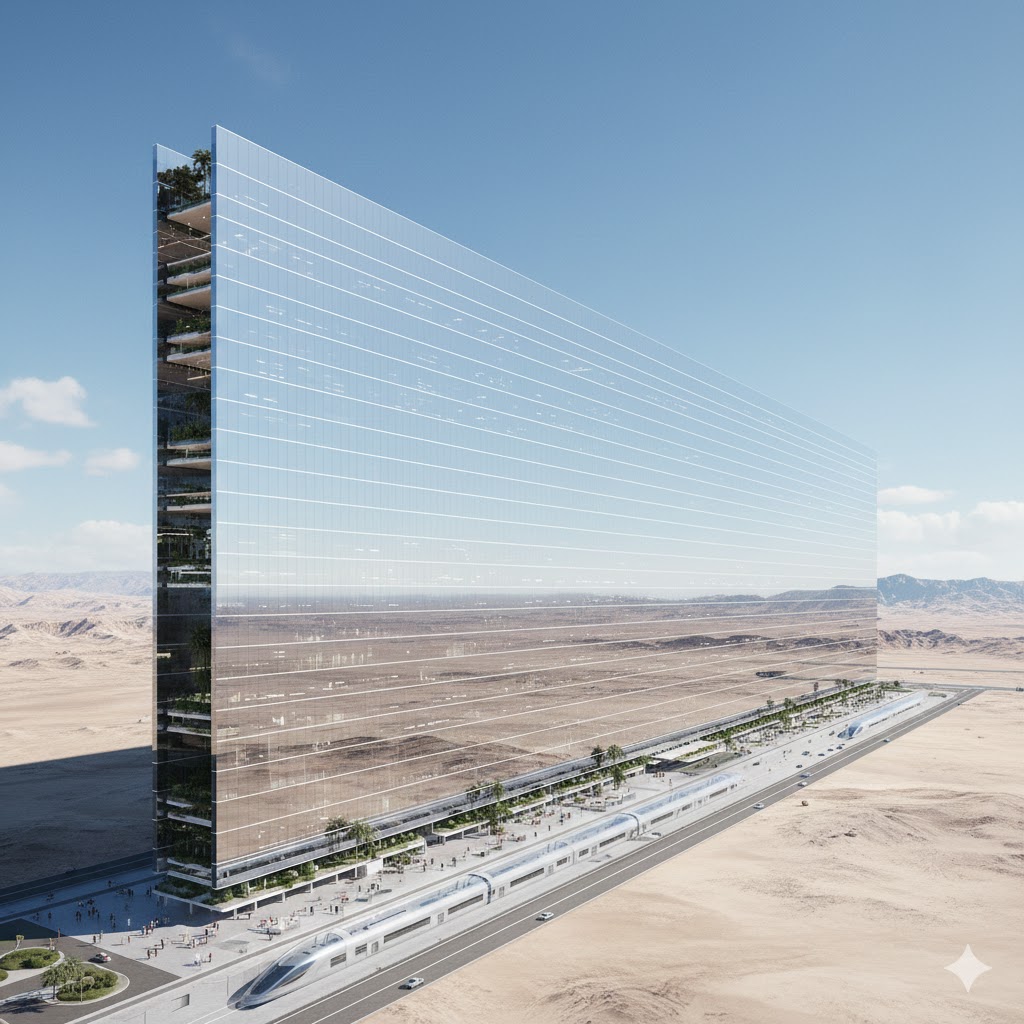
The Line: A 170-kilometer-long, 200-meter-wide vertical city designed to house millions of people with no roads, cars, or carbon emissions. It promises all daily necessities will be reachable within a five-minute walk.
-
Oxagon: Planned as the world’s largest floating industrial complex, designed to be a hub for advanced manufacturing, clean energy, and robotics.
-
Trojena: A unique mountain destination designed for year-round outdoor sports and adventure tourism, which includes planning for an open-air ski resort in the desert mountains.
The investment is meant to attract global talent and massive foreign direct investment (FDI), creating hundreds of thousands of jobs and serving as an economic engine for the entire region. The project relies on creating an environment with zero tolerance for cars, pollution, or outdated technology, aiming for a quality of life unlike anywhere else on Earth. The question, however, is whether this colossal investment can actually translate into a feasible and sustainable reality.
2. The Feasibility Score: Can They Really Build It?
The primary challenge for NEOM is not funding; it is the Feasibility of transforming unprecedented architectural concepts into livable, functional urban spaces on an aggressive timeline. Building a traditional city is complex; building a 170 km linear city powered entirely by renewable energy in a remote desert landscape introduces layers of difficulty never before attempted.
2.1 Technological Hurdles (The Innovation Gap)
NEOM requires technologies that either do not yet exist at scale or have never been integrated into a single urban ecosystem:
-
Utility Tunnels and Logistics: The plan requires underground infrastructure that handles high-speed rail, utilities, and automated logistics. The logistics of building and maintaining a 170 km subterranean spine are enormous, requiring specialized tunneling equipment and construction schedules that have already faced significant delays.
-
AI and Robotics: The city promises to be entirely managed by AI, running everything from security and utilities to personalized services for residents. Developing the AI frameworks needed to manage a smart city of millions—and ensuring that system is secure and reliable—is a multi-decade technological challenge that goes beyond current commercial capabilities.
-
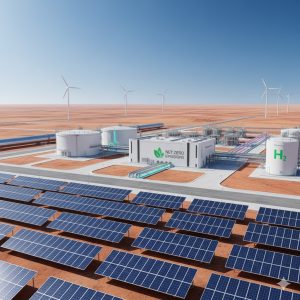
Water and Energy: Operating a huge population in the desert requires massive amounts of desalinated water and 100% renewable energy. While Saudi Arabia is investing in large solar and green hydrogen projects (like HELIOS Green Fuels), achieving complete energy independence and water security for millions of residents is a giant logistical leap.
2.2 Timeline and Population Targets (The Reality Check)
Initial goals projected housing 1.5 million residents in The Line by 2030. These targets have already been drastically revised, shrinking the initial scope to a much smaller segment and lowering the population goal to around 300,000 in the first phase.
This revision highlights the gap between the visionary concept and the practical realities of construction and engineering in a difficult environment. The scale and complexity demand a longer realization period, placing heavy pressure on the Feasibility Score.
The challenge of attracting the necessary foreign talent—the architects, engineers, programmers, and academics needed to both build and inhabit this city—is equally important. NEOM is competing globally for the same talent pool, and its ability to attract and retain millions of highly skilled professionals will ultimately determine its long-term success. For more insight into the challenges of scaling up new technologies, especially regarding infrastructure, review how other nations handle large-scale projects like those detailed in The Core Tech That Will Transform Your Home Network for managing modern connectivity standards.
3. The Sustainability Score: Is “Zero Carbon” Achievable?
The most defining promise of NEOM, and its biggest claim to global relevance, is its commitment to absolute Sustainability—a city with zero carbon emissions, zero cars, and a commitment to preserving 95% of the surrounding natural environment.
3.1 Environmental Impact and Construction Footprint
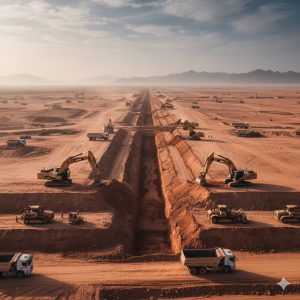
The primary attack on the Sustainability Score comes from the immense construction footprint. Building a structure the size of The Line requires astronomical amounts of materials, including steel, glass, and concrete.
-
Embodied Carbon: The process of manufacturing these materials (especially cement) releases huge amounts of carbon dioxide, known as embodied carbon. For NEOM to truly be “zero carbon,” it must somehow offset or eliminate the emissions from its initial construction phase, a challenge experts believe is currently impossible at this scale.
-
Natural Ecosystem: The project is being built on the pristine Red Sea coast and desert land, potentially disrupting sensitive ecosystems and migratory bird paths. While the project promises to preserve nature, the sheer magnitude of the development inevitably alters the natural environment permanently.
3.2 Social and Ethical Sustainability
Sustainability also extends to the human element. The realization of NEOM has involved displacing thousands of local residents (the Howeitat tribe), raising serious ethical questions about land rights and forced relocation.
-
Livability and Control: The concept of a fully automated, AI-managed city also raises concerns about privacy, data control, and surveillance. For long-term sustainability, a city must be psychologically and socially viable, offering residents a genuine sense of community and freedom—which is difficult to achieve in a highly controlled, purpose-built environment.
For NEOM’s high-minded vision to succeed, it must maintain a credible Sustainability Score by showing transparent progress not just on solar panels and hydrogen, but on managing its ecological and social costs. If the city ends up being a short-term, high-tech curiosity that collapses under its own operational costs, the Sustainability Score will be zero.
4. REALUSESCORE.COM Analysis: The NEOM Project Scorecard
This analysis evaluates the NEOM project by comparing the certainty of its massive Investment against the high uncertainties surrounding its Feasibility and long-term Sustainability.
| Evaluation Metric | Max. Potential Impact | NEOM Project Score (Out of 10) | Rationale |
| Investment Certainty | Capital availability and political will | 9.9 | Certain. The project is fully backed by the Saudi Public Investment Fund and the highest levels of government, ensuring funding continuity. |
| Architectural Feasibility | The Line’s ability to be constructed as designed | 4.5 | Low. The unprecedented scale and nature of the vertical city (The Line) face immense logistical, engineering, and timeline challenges. |
| Technological Feasibility | AI, automation, and full renewable integration | 6.0 | Moderate. While technology exists, integrating it reliably at this unique scale requires solving problems that have not yet been solved globally. |
| Environmental Sustainability | Achieving net-zero construction and operation | 5.0 | High Risk. The embodied carbon footprint of construction is massive. The “zero-carbon” goal is extremely difficult, if not impossible, to achieve without major offsets. |
| Social/Ethical Sustainability | Attracting long-term residents and social viability | 5.5 | Moderate Risk. Attracting the necessary global talent pool is challenging, and concerns over privacy and social control remain significant barriers to livability. |
| Overall Realization Score | Likelihood of meeting long-term goals (2040+) | 5.8 | High Uncertainty. The project will likely be built in part, but the full vision (The Line, Oxagon) is highly unlikely to be realized on time or budget. |
The conclusion is that while the Investment risk is near zero—the money is definitely there—the Feasibility and Sustainability risks are extremely high. The project should be viewed as an ambitious, long-term technological testing ground for future urbanism, rather than a guaranteed success story.